E Payment Status Check: Everything You Need to Know
E Payment Status Check is an essential step in the digital era, where e-payments have become the preferred method for paying government fees, taxes, utility bills, and online service charges, especially through platforms like mp treasury. However, many users often face confusion after completing a transaction—whether the payment was successful, pending, or failed.
By performing an e-payment status check, you can quickly verify transaction confirmation, track payment reference numbers, and avoid duplicate or failed payments. Whether you are paying through a government portal, mp treasury system, or online banking platform, understanding how to check e-payment status helps ensure transparency, accuracy, and peace of mind. This guide explains everything you need to know about e-payment status checks, common issues, and how to resolve them efficiently.
What Is an E‑Payment Status Check?
An e‑payment status check simply tells you whether your electronic payment has been received, processed, or is still pending. Think of it as a receipt you can check online without visiting a bank or office.
It’s used for:
And many services now let you check status right from your phone or computer — no long lines or confusing paperwork.
Why You Should Always Check Your E‑Payment Status
Checking your status matters because it:
Plus, most systems are free and available 24/7 — so you can check whenever it suits you.
How to Check E‑Payment Status Online (Main Methods)
Methods vary by service, but here are the most common ones you’ll use:
Using a Government Portal (Like the 8171 Portal)
For programs like Benazir Income Support Programme (BISP) in Pakistan, there’s a specific portal where you can check payment status.
Here’s how:
Within seconds you’ll see:
Checking Via SMS (No Internet Needed)
Not everyone has fast internet — so SMS checks are great. For example, with BISP you can simply:
Why SMS is awesome:
Pro tips:
Through Official Email or SMS Alerts
Some systems allow you to register an email or phone number and will send status updates automatically. This is handy if you don’t want to keep checking manually.
How to Check Payment Status Using MP Treasury Portal
If you want to check the payment status through MP Treasury Portal, here’s the simple process:
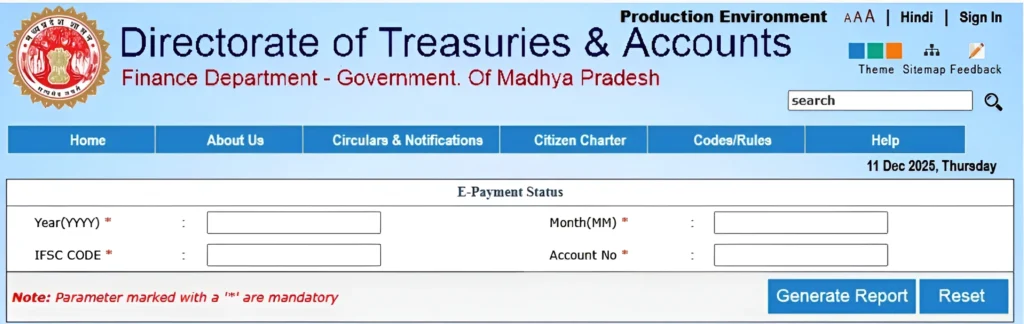
Step-1: First, open the ‘E-Payment Report Status’ web page of the MP Treasury portal.
Step-2: Enter the year and month you want to check (for example, year 2024, 2025, etc., and month 03, 04, 11, etc.).
Step-3: Enter your IFSC Code and Account number of your bank.
Step-4: Then, click on the “Generate Report” button.
Step-5: Now, you can see your payment transaction details report.
Common Things You’ll See in a Status Report
When you check your payment status, you might see phrases like:
If your status is anything besides “Paid,” don’t panic — often it’s just a verification step.
Best Tips to Avoid Problems with E‑Payments
Here are quick tips to make your life easier:
What to Do If Your Payment Is Still Pending
If the status says pending or under verification, here’s what you can do:
Often just updating your info solves it.
How E‑Payment Status Checks Are Used in Real Life
Here are some common cases where status check matters:
- Government Support Payments
Governments use portals like 8171 to let beneficiaries check funds. This saves time and reduces travel — especially in rural areas.
- Tax Payments
Taxpayers can check if the tax office has received and processed their payment. Some systems show PSID (Payment Slip ID) and status.
- Utility or Fee Payments
You can confirm whether your electricity or service fee was successfully sent — super helpful to avoid late penalties.
Security Tips (Stay Safe Online)
You’re dealing with sensitive data — keep it secure.
Wrap‑Up: Why E‑Payment Status Check Is Useful
E‑payment status checking might sound small, but it saves time, stress, and money. Whether it’s confirming a benefit payment, a tax deposit, or service fee, knowing your status fast is a big deal.
Next time you make a payment online, take a minute to check the status — you’ll thank yourself later.
FAQs
Final Thoughts
E-Payment Status Check plays a vital role in ensuring that digital transactions are completed smoothly and securely. By regularly checking your payment status through official portals, SMS services, or platforms like MP Treasury, users can instantly confirm whether their payment is successful, pending, or failed.
This simple process helps avoid confusion, prevents duplicate payments, and protects users from delays or penalties. In an era where most government and service payments are made online, e-payment status checking provides transparency, accuracy, and peace of mind, making it an essential habit for every digital user.