How MP Treasury Secures Data & Prevents Unauthorized Access
In today’s digital age, government departments like the MP Treasury handle sensitive financial data that requires top-notch security. This data includes everything from tax records to citizen information. Without proper protection, this information could fall into the wrong hands, leading to severe consequences.
This article will guide you through the various methods MP Treasury secures data and prevents unauthorized access. You’ll understand how these measures help keep our financial systems safe.
What Is Data Security, and Why Is It Important?
Data security refers to the protection of digital data from unauthorized access, corruption, or theft. For the MP Treasury, this means ensuring that sensitive information like financial records and personal details of citizens is kept safe at all times.
There are three main goals in data security:
Only authorized users can access sensitive data.
Data must remain accurate and unaltered unless changes are made by authorized users.
The data should be accessible to authorized users when needed.
By focusing on these principles, the MP Treasury secures data to ensure it remains safe from potential threats.
Strong Access Control Systems
MP Treasury secures data primarily through robust access control systems. These systems ensure that only people with the correct permissions can access certain data. Here’s how:
Role-Based Access Control (RBAC)
Employees and officials only have access to the information necessary for their job. This minimizes the risk of someone accessing data they shouldn’t.
Multi-Factor Authentication (MFA)
Instead of just entering a password, users are asked to provide another piece of information (like a code sent to their phone) before accessing the system. This adds an extra layer of protection.
Strong Password Policies
Treasury staff are required to use complex passwords that are changed regularly to prevent unauthorized login attempts..
Pro Tip: If you’re managing a system, always ensure that MFA is enabled. It drastically reduces the risk of unauthorized access.
Encryption to Keep Data Safe
Encryption is a technique that scrambles data, making it unreadable to anyone who doesn’t have the decryption key. The MP Treasury secures data by using encryption in two key ways:
Data stored on servers is encrypted, ensuring that even if someone physically steals the data, it will be useless without the key.
Data being transferred between systems (like sending payment details) is encrypted, ensuring that it can’t be intercepted by hackers during transmission.
Pro Tip: Regularly update your encryption methods. Older encryption techniques can become vulnerable over time.
Monitoring Systems to Detect Suspicious Activity
Even with strong protections in place, unauthorized access can still happen. That’s why MP Treasury secures data by continuously monitoring its systems for any unusual activity.
Behavioral Analytics
By tracking patterns in how users interact with data, the system can quickly spot when something is unusual, like an employee accessing records they don’t usually need.
Real-time Alerts
Whenever suspicious activity is detected, an alert is triggered, allowing the IT team to react immediately.
Pro Tip: Set up real-time monitoring and alerting for all sensitive data access points. The sooner a potential threat is detected, the quicker it can be stopped.
Educating Employees to Prevent Human Errors
Humans can sometimes be the weakest link in data security. For example, staff might accidentally click on a malicious link or share sensitive data without realizing it.
To reduce the chances of these mistakes, MP Treasury secures data through employee security training. Employees are trained on:
Pro Tip: Regularly train your employees and keep them updated on new security threats. Cybersecurity is a constantly evolving field.
Backups and Contingency Plans
MP Treasury secures data by ensuring that all critical data is regularly backed up. This means that in the event of a data breach, ransomware attack, or server failure, the data can be quickly restored to minimize downtime.
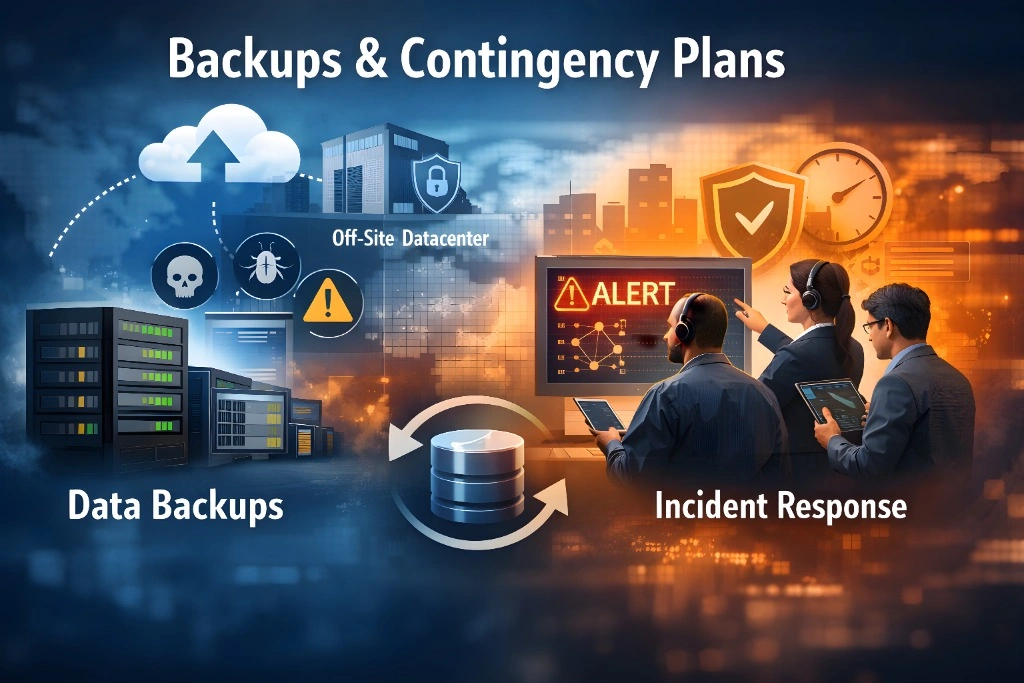
These are stored in secure, off-site locations to ensure they remain protected, even if the primary systems are compromised.
MP Treasury secures data through a detailed incident response plan. This helps them act quickly to prevent further damage and get systems back up and running.
Pro Tip: Always keep multiple backups of critical data and test them regularly. You don’t want to be caught unprepared in case of an attack.
Legal Compliance and Strong Governance
MP Treasury secures data while ensuring compliance with national data protection regulations. They are required to follow legal rules and regulations when it comes to handling citizen and financial data. This includes complying with privacy laws like GDPR and other regulations.
Having clear policies helps ensure that:
Pro Tip: Always stay up-to-date with the latest regulations to avoid fines and breaches of trust.
Continuous Improvement and Risk Management
Data security is not a one-time job; it’s an ongoing process. MP Treasury secures data by regularly reviewing its security measures to make sure they are up to date. This includes:
Pro Tip: Always schedule regular security audits and vulnerability assessments to stay ahead of potential threats.
FAQs
Final Thoughts
MP Treasury secures data using a combination of access controls, encryption, monitoring systems, employee education, backups, and legal compliance. These measures ensure that taxpayer information, financial data, and other sensitive records are protected from unauthorized access and potential breaches.
In an age where cyber threats are more common than ever, these precautions help MP Treasury secures data and maintain trust and safety for all its citizens.
Takeaway Tip: Protecting data is a shared responsibility. Whether you’re part of a government treasury or running your own small business, always ensure your data is protected through strong security measures, regular training, and careful monitoring.