MP Treasury Budget Allocation Explained for Employees Guide
The MP Treasury Budget Allocation plays an important role in the daily working and financial security of government employees in Madhya Pradesh. Yet, many employees find it difficult to understand how the budget is planned, approved, and finally released through the treasury system. Knowing how this process works can help employees better understand salary payments, allowances, departmental spending, and policy decisions.
This guide explains the MP Treasury Budget Allocation in a simple and practical way, without complex terms or technical language. It is designed especially for employees who want clear answers, real-life examples, and useful tips. By the end of this guide, you will have a better understanding of how government funds are allocated, why it matters to your job, and how budget decisions can affect your work and financial planning.
What Is the MP Treasury Budget Allocation?
In simple words:
Budget Allocation is the plan of how the Government of Madhya Pradesh decides to spend money for the year.
You can think of it like a household budget but for the entire state.
Each department like Health, Education, Agriculture, Police, Pensions gets a share of the total money available. This share is the allocation for that department.
When we talk about the Treasury, we mean the government office that:
Why Does This Matter for Employees?
If you are a government employee, this topic matters because:
So this isn’t just academic it’s practical for your job and financial planning.
How Is the Budget Prepared? (Easy Version)
The MP government goes through these steps:
First, they estimate how much money the state will have:
- Taxes (GST, VAT, etc.)
- Money from the Centre
- Fees and other receipts
This gives the total money available for the year.
Each department tells how much money it needs for:
- salary payments
- new projects
- running costs
The Finance Department balances total needs against available money, and decides how much to allocate to each department.
The budget is presented in the Madhya Pradesh Legislative Assembly and approved by lawmakers.
What Does “Allocation” Really Mean?
Put simply:
Allocation = Money set aside for a department or purpose from the total budget.
Example:
Every department tries to get the money it needs, but priority matters — some departments get more based on government goals.
Types of Budget Allocations You Should Know
There are two big parts:
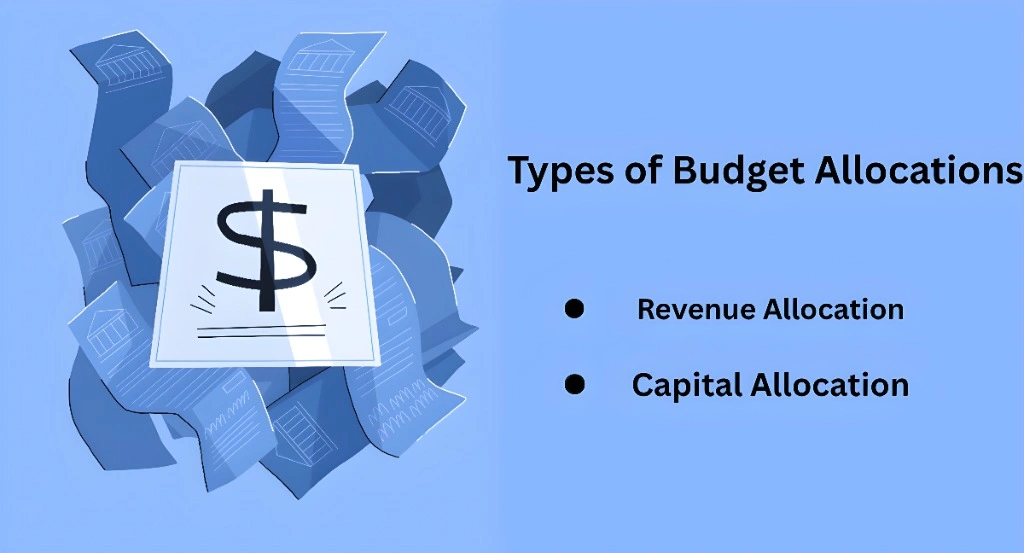
This is money meant for:
- salaries
- pensions
- maintenance and day‑to‑day work
Revenue allocations are often steady and predictable.
This is money meant for building things:
- new hospitals
- irrigation projects
- roads
- IT infrastructure
Capital allocations can fluctuate based on development priorities.
What Happens After Allocation?
Once the allocation is approved:
How Employees Experience This in Real Life
Here’s how this affects you directly:
If the budget allocation for salaries is timely and accurate:
- your salary arrives without delays
- pensions are paid on time
- increments and allowances are paid correctly
When more money is allocated to employee welfare or new schemes, benefits may improve.
If allocations are late or reduced, departments may hold salaries or delay projects which affects workload and morale.
That’s why it’s smart to understand the basics so you’re prepared for changes.
A Simple Example (For Employees)
Imagine you run a household:
Now change it to government scale:
Your department = your “monthly money”.
The state’s budget = the government’s “yearly money”.
Common Questions Employees Ask
Employees often have questions about how budget allocations impact their salaries, pensions, and allowances. Here are some of the most frequently asked questions to help clarify the process.
What if my department doesn’t get enough funds?
Then they might:
Does state GST affect my salary?
Not directly, but if tax revenue is low, overall allocation might shrink — and that could delay payments.
How can I check allocations?
You can check budget orders and reports from official portals like the MP Finance website.
Quick Tips for Employees
Why Knowing This Can Help Your Career
This isn’t just about money.
Understanding budget allocation:
In simple words knowledge is power, and budget knowledge is especially powerful for government employees!
FAQs
Final Thoughts
The MP Treasury Budget Allocation is how the Government of Madhya Pradesh plans and distributes its money across departments for salaries, projects, and development. As an employee, this affects how timely your pay is, how resources are available, and how your department functions. Budget allocations are decided based on revenue estimates, departmental needs, and government priorities, then approved and implemented through the treasury system for smooth financial operations.
Understanding the budget allocation process gives you clarity and allows you to plan better for your career and financial future as a government employee.